Yasha Karda
integrative mindfulness-based therapy
“The outcome of therapy is the discovery that we are not what happened to us but what we chose to become.”James Hollis
About Me
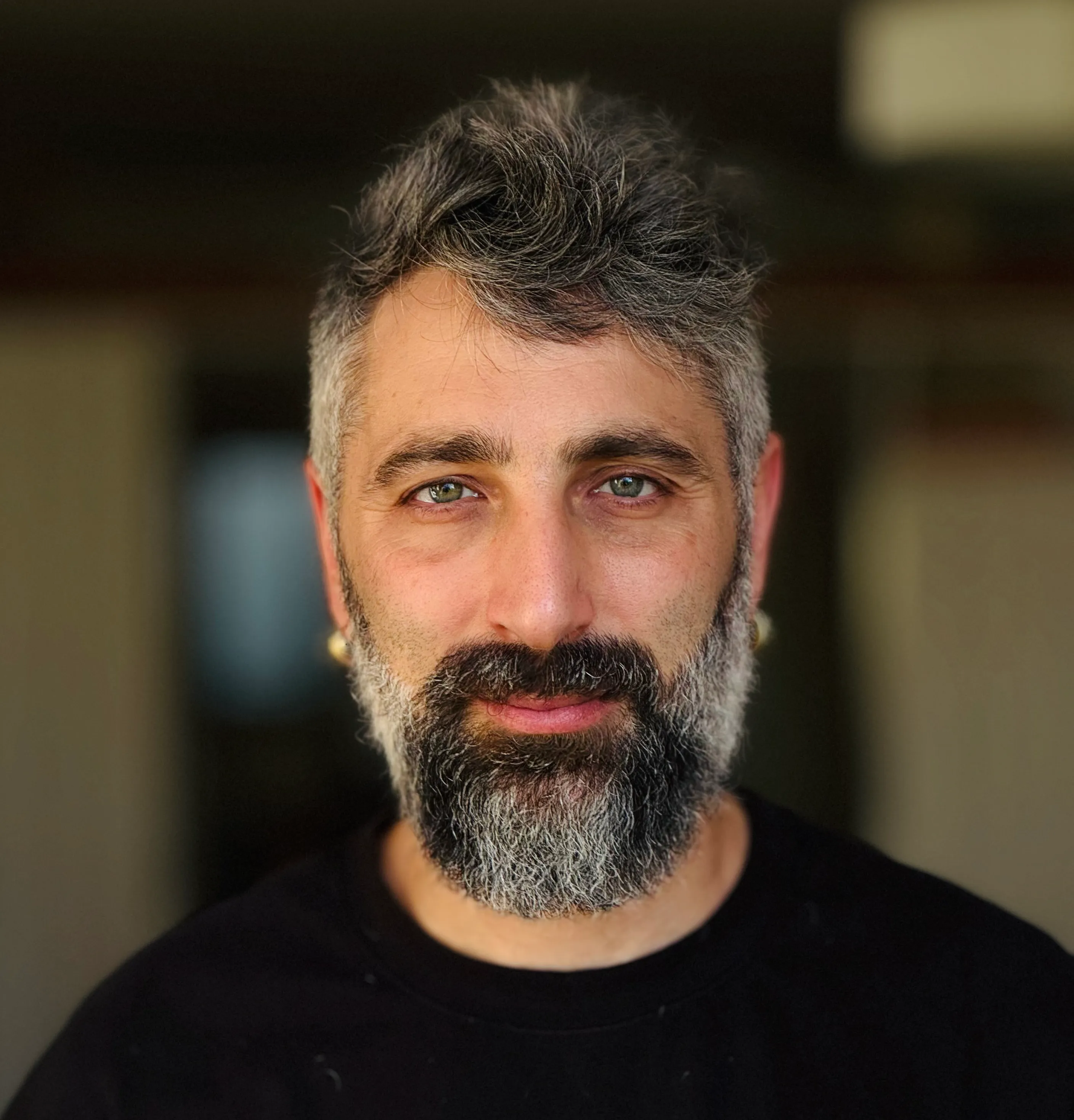
Hey, I’m Yasha. I practice integrative mindfulness-based therapy. I also write essays on psychotherapeutic theory and academic papers about psychology and culture.
I’m 42 and live in Tel Aviv with my wife and six children.
My journey into the profession began sixteen years ago when I first sat in the therapist’s office — on a client’s couch.
It took time and a real transformation to switch chairs: along the way, I’ve built and sold a tech company and mentored startups and entrepreneurs. I completed training in a somatic, mindfulness-based approach (Israeli “Satya” method) and continue to further my psychotherapy studies at Hakomi Institute. I practice under the supervision of a clinical psychologist.
I know how to sit with clients in pain. Some of the challenges I work with, I not only studied but experienced firsthand: immigration, the search for meaning and identity, midlife crisis, divorce, and the lasting impact of childhood adversity and trauma. I’m also drawn to helping those who struggle with self-expression and becoming more fully themselves.
I believe therapy can both alleviate suffering and make life more interesting and fulfilling.
Come as you are, and I’ll be glad to join you on the walk.
I work in English, Hebrew, and Russian. In person in Tel Aviv and online.
Approach
The therapy I practice is based on mindfulness, experience, and relationship.
Mindfulness is the awareness of what’s happening inside you as it happens, including thoughts, emotions, and body sensations. Healing comes from learning to notice what’s there (from a sudden urge to change the subject to a lump in the throat when you are close to crying), and then being with the feeling, emotion, or thought, as it is, allowing it to tell its story.
Mindfulness provides access to a felt sense of things — an inner measure for whether something is right or wrong — for you. Be it a memory, a statement, or an idea. It’s how you know something before you can even explain.
Talking therapy is commonly thought to work when words are found to convey underlying emotions. It is most effective, though, when these emotions are not just named and discussed, but experienced. This is why, when working with both the present and the long-gone past, we go slowly and pause to give space not just to the words of the story, but to its emotional content.
That way we can not only see the origins of unhelpful patterns and behavior, but decrease the emotional charge that makes them repeat themselves.
The saying goes that we are wounded in relationship, and we can be healed in relationship. A therapeutic relationship is both a container where change happens and a vehicle of this change. This is why I pay special attention to what happens between us in the room.
Childhood that was not good enough often leads to difficulties with self-expression.
Expressing yourself in the therapy room not only surfaces a lot of material to work through, but also leads to greater freedom to be. When words aren’t enough, I can employ creative activities like drawing and sculpting.
I see resistance as a guide, and sometimes use little experiments to find it. Working through is unpleasant — but very effective.
For significant change to occur, the therapist needs to be authentically present in the relationship and aim for empathetic understanding and unconditional positive regard for the client. This is what I bring to every session.
More than anything, however, I believe in creating new therapy for each client.